Ik heb mezelf eindelijk een (refurbished) nieuw toestel gekocht waarmee je kan bellen en zo van die andere nuttige dingen.
Uiteraard moet daar SailfishOS van me opstaan.
En deze keer werkt echt alles dat ik nodig heb. Goede ontvangst, GPS, 4G
Ik heb mezelf eindelijk een (refurbished) nieuw toestel gekocht waarmee je kan bellen en zo van die andere nuttige dingen.
Uiteraard moet daar SailfishOS van me opstaan.
En deze keer werkt echt alles dat ik nodig heb. Goede ontvangst, GPS, 4G
Beste andere Belgen
Venera en ik hebben een bébé gemaakt. Hij is Troi en naar het schijnt lijkt hij erg op mij.
Hier is een fotooke van hem en zijn mama. Troi is uiteraard heel erg schattig:

Dit kan helemaal niet in België want het vereist een serieus niet populistisch debat tussen alle politieke partijen (waarbij ze hun rekenmachine en logisch redeneren meenemen én er op toezien dat het budget écht in balans blijft). Dat bestaat al decennia niet meer op het Federaal niveau. Dus ja.
Maar een manier om het budgetair probleem van het land op te lossen zou kunnen door meer te belasten op consumptie door het BTW tarief van 21% naar bv. 25% of 30% te verhogen, (veel) minder te belasten op inkomen en tot slot meer producten en diensten op 6% en 12% te zetten.
M.a.w. alle noodzakelijke uitgaven zoals electriciteit, Internet, (gas) verwarming, water, brood, en zo verder op 6%. Een (veel) grotere mand van (bv. gezonde) voedingsmiddelen, woning (en kosten zoals bv. verbouwingen) op 12%.
Maar voor alle luxeconsumptie 25% of 30% of eventueel zelfs 40%.
Daaraan gekoppeld een stevige verlaging van de personenbelasting.
Gevolg meer BTW-inkomsten uit consumptie. Betere concurrentiepositie t.o.v. onze buurlanden doordat de salarissen niet hoeven te stijgen (door de verlaging van de personenbelasting). Koopkracht wordt daardoor versterkt en die versterking wordt aangevuld doordat er een grotere mand voor 6% en 12% BTW tarieven is.
M.a.w. enkel wordt luxeconsumptie (veel) meer belast. Noodzakelijke consumptie gaat naar 6% of 12% (of men behoudt hiervoor de 21%).
Grootste nadeel is dat onze boekhouders meer werk hebben. Maar ik denk wel dat ze dat zo erg niet zullen vinden (ze factureren hun extra uren trouwens aan het luxeconsumptie BTW tarief).
Voorbeeld voordeel is dat je consumptie beter kan sturen. Wil je dat wij Belgen meer electrische wagens kopen? Maak zo’n wagen 6% BTW en een wagen met een dieselverbrandingsmotor 40% BTW. Wil je dat jongeren gezondere voeding eten? Coca Cola 40% BTW en fruitsap 6% BTW.
Uiteraard moet je ook besparen en een serieuze efficiëntieoefening doen.
Wij houden met Euroclear zo’n 260 miljard euro aan Russische geblokkeerde tegoeden vast.
Moesten wij die gebruiken dan houdt dat in dat ons land de komende honderd en meer jaar internationaal gezien zal worden als een dief.
Tegelijkertijd spenderen wij slechts zo’n procent van onze GDP aan defensie. Dat is niet goed. Maar ja. Misschien indien de VS zo erg graag wil dat we die Russische tegoeden voor hun politieke pleziertjes gebruiken, dat ze deze ‘gunsten’ als Belgische defensie-uitgaven kunnen zien?
Bovendien horen er een aantal garanties te zijn t.o.v. de represailles die Rusland zal uitwerken tegen België wanneer Euroclear de tegoeden herinvesteert (dit wil voor Rusland zeggen: steelt).
Waar zijn die garanties? Welke zijn ze? Over hoeveel geld gaat het? Is het extreem veel? Want dat moet. Is het walgelijk extreem veel? Want dat moet.
Die garanties, gaan die over meer dan honderd jaar? Want dat moet.
Het is allemaal wel gemakkelijk en zo om een en ander te willen. Maar wat staat daar tegenover?
Sorry, maar een bedrijf schandelijk de dieperik injagen is onwettelijk. Punt. Daar mag, nee moet, een gepaste straf tegenover staan.
Kurt Meers – opinie stuk
Ik vraag me ook af waarom journalisten die Vansteenbrugge uitnodigen niet ingaan op zijn totaal foute definities:
Laster is iemand kwaadwillig iets verwijten zodat dit deze persoon blootstelt aan publieke verachting, zonder dat men erin slaagt het wettelijke bewijs ervan te leveren, terwijl de wet het leveren van het bewijs veronderstelt. Dit kan bijvoorbeeld wanneer je in het openbaar beschuldigd wordt van pedofilie, terwijl hier absoluut geen bewijs van voorhanden is.
Eerroof is iemand kwaadwillig iets verwijten zodat de eer van die persoon wordt aangetast of hij/zij wordt blootgesteld aan publieke verachting, zonder dat het bewijs hiervan wettelijk gezien geleverd kan of mag worden. Iemand wordt bijvoorbeeld beschuldigd van diefstal, maar het wettelijke bewijs daarvan is niet meer te leveren omdat de zaak verjaard is.
Advo-Recht
M.a.w. Laster en eerroof heeft totaal niets te maken met wat Vansteenbrugge daarover beweert: iets over dat je mening de democratie niet in gevaar mag brengen, wat er totaal niets mee te maken heeft – en wat trouwens wel toegelaten is als meningsuiting. Bijvoorbeeld Sharia4Belgium mocht haar mening uiten. Daar werden ze niet voor bestraft. Wel voor het rondselen van terroristen.
Ik heb zelden zo’n slechte advocaat gezien. Het is een populist die slecht theater speelt en ook de meest dwaze strategie adviseert voor zijn cliënt (waardoor die nu een gevangenisstraf i.p.v. een werkstraf oploopt). Maarja. Dat was duidelijk onderdeel van het theater om zo de publieke opinie te kunnen bespelen met: het is zo’n zware straf! Eigen keuze. Eigen schuld.
Laten we de definitie van Laster even vergelijken met wat er hier gebeurd is: het aan de schandpaal nagelen van de eigenaars van een restaurant die totaal niets met de zaak te maken hebben. Dat is letterlijk en exact hetzelfde als het blootstellen aan publieke verachting zonder dat men erin slaagt het wettelijke bewijs ervan te leveren.
Dat valt niet onder de noemer vrijheid van meningsuiting. Wel onder de noemer misdaad.
Er wordt ook schadevergoeding met straf vergeleken. Wat totaal onjuist is. Een schadevergoeding is geen straf. Het is de vergoeding voor schade die jij anderen hebt aangedaan. Dat is geen straf. Die vergoeding kan trouwens nog oplopen (dus meer dan de 20000 Euro worden) aangezien er een expert is aangesteld die de werkelijke schade nu zal begroten.
Ik denk eerlijk gezegd dat dat restaurant in Antwerpen veel meer dan 20000 Euro schade heeft opgelopen. Dat moet allemaal en volledig vergoed worden. Hoe hoog dat bedrag ook is.
Die schadevergoeding vergelijken met de schadevergoeding die betaald moest worden aan de ouders van een student die gestorven is tijdens een studentendoop: a) die zaken hebben totaal niets met elkaar te maken en het is b) lijkenpikkenrij. Er is maar weinig dat ik meer verachtelijk vind. Behalve dan politieke lijkenpikkerij. Dat is nog erger en bovendien een aanfluiting van de scheiding der machten.
Waar je voor zou kunnen pleiten in het Federaal Parlement is om de schadevergoeding voor onopzettelijke doding met schuld te verhogen. Maar daarover hoort dan eerst een behoorlijk gevoerd democratisch debat plaatst te vinden. Dat is dus niet de populistische onzin die we gewoon zijn van Sammy Mahdi.
De wet veronderstelt het leveren van het bewijs hiervoor: hij heeft de afgelopen jaren als politicus geen enkele aanzet om dat democratisch debat te voeren ondernomen.
Hij is dus een populistische lijkenpikker.
L’amour est comme l’oiseau de Twitter
Stromae – Carmen
On est bleu de lui, seulement pour 48 heures
ps. Lees ook zeker de open brief van de moeder van Sanda Dia. Zij is de recuperatie van de dood van haar zoon ook volledig beu.
Ik merkte op het einde van een Terzake dat onze teerbeminde ADIV opzoek is naar mensen.
Ik mag hopen dat ze planet.grep lezen want ja, een deel van het soort volk dat de ADIV nodig heeft leest onze blogs. Gelukkig maar.
Nu, ik heb in 2014 al eens omschreven wat toen Miguel De Bruycker nodig had voor zijn Centrum voor Cybersecurity.
Meneer Van Strythem Michel; jij hebt precies hetzelfde nodig als Miguel toen. Toch? Je gaat die mensen dan ook op precies dezelfde manier vinden als hoe Miguel ze vond: Bescherm ons tegen afluisteren, luister zelf enkel binnen een wettelijk kader af.
Ik schreef in 2014:
Zolang de overheid haar eigen moreel compas volgt, zijn deze mensen bereid hun kunnen voor de overheid in te zetten.
Maar de wet staat boven de militair. Ze moet gevolgd worden. Ook door de inlichtingendiensten. Het is onze enige garantie op een vrije samenleving: ik wil niet werken of geholpen hebben aan een wereld waarin de burger door technologie vrijheden zoals privacy verliest.
Daartussen vond je in mijn schrijfsel een opsommig van een paar opdrachtjes die een klein beetje moeilijk zijn.
Zoals het verbergen van een Linux kernel module, wat dus een standaard Linux virus zou doen. Het exfiltreren van data over een netwerk device zonder dat het al te veel opvalt. Dat is iets wat de ADIV zal willen doen. Het ontvangen van commando’s. Dat is eigenlijk wat Back orifice ook al deed.
Ik omschreef ook dat ze moeten weten hoe een bufferoverflow fout werkt. Omdat dit een veel voorkomende programmeursfout is die tot beveiligingsproblemen leidt. M.a.w. ze moeten toch op zijn minst weten hoe ze zelf zo’n beveiligingsprobleem zouden kunnen maken. Al was het maar om hun aanvalstechnieken te kunnen voorbereiden.
Ik verwachtte ook dat ze een standaard socket-servertje kunnen opzetten. Natuurlijk. Dat is minimaal.
De gemiddelde programmeur zal dat vast allemaal niet kunnen. Maar we hebben de gemiddelde programmeur dan ook niet nodig.
Als de ADIV zich houdt aan de wet en steeds binnen de context van de wet werkt, dan zal de ADIV de besten van ons land vinden. Net zoals hoe de brandweer de beste mensen van het land weet te activeren, zal de ADIV de beste programmeurs kunnen activeren.
Maar dat is omdat het zich aan haar eigen morele compas houdt.
Doet ze dat niet, dan niet.
Met vriendelijke groeten,
Philip. Programmeur.
A while ago I wrote a article comparing Waterloo with Bakhmut. That was in August 2023. We are in February 2024 and I predict that soon I will have to say the same about Avdiivka.
The city is about to be encircled the coming month and is in fact already ~ technically encircled (all of its supply roads are within fire range of Russians). I think that Avdiivka has already surpassed many times the death toll of Bakhmut.
The amounts of deaths are now also becoming comparable to the WWII Operation Bagration which had about 400000 German and 180000 Red Army kills.
The Soviet operation was named after the Georgian prince Pyotr Bagration (1765–1812), a general of the Imperial Russian Army during the Napoleonic Wars.
Wikipedia
Ik heb even getwijfeld of ik dit zou delen. Maar ja, waarom ook niet? Ik kreeg gisteren of zo een E-mail van Inge Depoorter uit Aarschot over dat men weer op zoek is naar voorzitters voor de komende verkiezingen.
Men heeft bij onze teerbeminde overheid blijkbaar een heuse database aangelegd van voormalig voorzitters van verkiezingen. En inderdaad, ik ben zo iemand! Want ik heb dat eens moeten doen van de kantonrechter hier in het arrondissement Leuven. Hij had mij gevonden. Hij had mij geselecteerd. Ik was het. Ik moest het doen. Ik heb dat dan ook gedaan.
Dus stuurt Inge Depoorter van stad Aarschot mij een E-mail of ik opnieuw voorzitter zou willen zijn voor de komende verkiezing? Ja maar …
Ja maar Inge,
Er zijn tijdens mijn voorzitterschap zoveel tellingen misgelopen dat U en uw overheid het toch onmogelijk kunnen vinden dat ik opnieuw een betrouwbaar voorzitter zou kunnen zijn voor de komende verkiezingen?
Één en ander is volgens mij door mijn onbekwaamheid tot stand gekomen. Bijvoorbeeld:
Twee dronken mannen boden zich in de ochtend aan om hun taak als bijzitter te komen doen. Normaal gesproken had ik als voorzitter deze twee nozems naar huis gestuurd. Maar ik vond principieel dat ook dronken mensen een belangrijke groep vormen in onze Aarschotse samenleving. Vooral wanneer die de moeite hadden gedaan gedurende een paar uur om te voet van het café te komen (wat volgens hen toch een hele afstand was – ik denk dat het ‘De Knoet’ was, of zo – het kan ook ‘De Flater’ geweest zijn).
Dus hield ik deze twee lieden in mijn gareel.
Het valt te vermoeden dat deze twee een belangrijke contributie hebben gedaan aan de totaal foute tellingen op de formulieren die ik als voorzitter moest indienen. Want uiteraard heb ik hen de stemformulieren in de naar mij opgestuurde dozen laten tellen.
Dat vond ik als aangestelde voorzitter een gepaste taak voor deze twee dronken personen.
Nadien moesten zij aan de deur staan om de rij te bewaren. Zo kon gans Rillaar die de naam “Van …” draagt (blijkbaar wordt de achternaam van de voorzitter gebruikt om te bepalen welke mensen op zijn lijst staan) ruiken welke alcoholische dranken men in De Flater en / of De Knoet serveert.
Het was dan ook vermoedelijk mijn onbekwaamheid als voorzitter dat heeft bijgedragen tot de beslissing om deze twee totaaldebielen in hun functie te houden. Ik had ook twee andere burgers kunnen selecteren: er stonden zeker vijf nuchtere mensen te wachten in de rij daar in de vroege ochtend in Rillaar. Zij waren daar om hun burgerlijke taak op zich te nemen om door mij als voorzitter uitgekozen te worden om bv. die twee onnozelaars te vervangen.
Helaas, want ik had die nozems gekozen. Toch. Ja. Ik bleek erg principieel te zijn. Bovendien hadden zij toch een stevige wandeling achter de rug! De dronken mannen hadden dat gedaan om hun burgerplicht te vervullen. Hoe kon ik hen het plezier ontnemen om voor hun land hun belangrijke taak te mogen vervullen?
U kan dat toch niet maken dat U opnieuw zo iemand als ikzelf als voorzitter aanduidt? Wie weet wat voor randdebielen ik de volgende keer aanduid om stembiljetten te tellen?
Ik zou opnieuw de grootsten onnozelaar die zich komt aanbieden kunnen aanstellen voor ook de belangrijkere functies. Zoals bijvoorbeeld secretaris.
Dat wilt U toch niet? Dat wilt de kantonrechter toch niet?
Ik stel voor dat U in overleg gaat met de kantonrechter over mijn mogelijke tweede aanstelling als voorzitter.
De tellingen zijn ernstig misgelopen vorige keer. Neem dat toch in overweging? De verkiezing is zo belangrijk.
Nu vermoed ik wel dat men mij net wel zal willen uitkiezen voor een tweede aanstelling als voorzitter. Wat ik hier zeg beschrijft misschien net wat men zoekt?
Goed ja. Dan doen we het een tweede keer.
Ik stel voor aan de door de kantonrechter geselecteerde bijzitters van ons geliefde dorp te Rillaar, dat men zich totaal bezopen aanmeldt aan mijn kiesloket in de vroege ochtend.
Ik zal U bijna zeker aanduiden als teller en ge moogt dan den helen dag mensen die in de rij staan één voor één doorlaten. Nadat ze uw adem hebben mogen waarnemen. Zo weet iedereen hoe heel erg zat dat gij waard.
Voor alle duidelijkheid. Ik ben voorstander van meer stricte wetgeving wat betreft immigratie in België. Dus dit standpunt doet daar niets aan af. Ik vind het goed dat mevrouw De Moor een nieuwe wet inzake migratie probeert te laten stemmen. Dit staat ook los van dat wetsvoorstel.
De huidige wet is echter van toepassing. Als staatssecretaris van asiel en migratie heeft zij de huidige wet na te leven en toe te passen. Dus niet haar eigen invulling daarvan. Noch haar fantasieën over wat het zou kunnen zijn. Daarvoor is voor haar een rol in het Federale parlement weggelegd. Dat kan dan de nieuwe wet worden. Die is nog niet gestemd. Die is dus nog niet in voegen getreden.
Ik ben ook voorstander van duidelijke en ernstige gevolgen wanneer er een misdrijf gepleegd wordt.
Ik vind dat wanneer een staatssecretaris of minister een misdrijf pleegt, dat de gevolgen ernstig en duidelijk moeten zijn. Dit hoort ook eventueel een gevangenisstraf te zijn. Want de wet moet nageleefd worden. Door iedereen.
Mevrouw De Moor weigert om schadevergoedingen te betalen en wentelt dit af in de zin van ‘het helpt ons geen millimeter verder’ wanneer haar kabinet’s koffiezetapparaat en diepvriezer in beslag genomen worden. Maar ondertussen is er wel schade veroorzaakt door haar beleidskeuzes.
Schade die door haar misdrijven zijn veroorzaakt. M.a.w. deze schade had niet gebeurd wanneer mevrouw De Moor die misdrijven niet had georganiseerd en dus niet had gepleegd.
Schade die veroorzaakt wordt door misdrijven moet vergoed worden. Wanneer dat misdrijf door een overheidsorganisatie zoals die van mevrouw De Moor gepleegd werd, dan is het net zoals wanneer dat misdrijf door om het even wie gepleegd werd.
Wanneer mevrouw De Moor echter beslist dat zij vrijgesteld wordt van het betalen van een door een rechter vastgelegde schadevergoeding, dan begaat mevrouw De Moor een nieuw misdrijf.
Dat nieuwe misdrijf heeft normaal gesproken tot gevolg bv. het beboeten, en zo verder (d.i. wanneer dienst vreemdelingenzaken een boete krijgt). Maar aangezien ook die beboeting niet tot het betalen van de schade zorgde, volgt normaliter een gevangenisstraf voor mevrouw De Moor (die als staatssecretaris voor asiel en migratie verantwoordelijk is voor de dienst vreemdelingenzaken).
Schade moet immers vergoed worden. Vonnissen moeten uitgevoerd worden. De rechter heeft het laatste woord. De rechter heeft gesproken. De dienst vreemdelingenzaken is veroordeeld tot het betalen van schadevergoedingen. Het laatste woord is gezegd door de rechter. Deze schadevergoedingen moeten betaald worden. Zonder meer, zonder tegenspraak.
Mevrouw De Moor wenst dit niet te doen. Dus moet mevrouw De Moor dan de gevangenis in.
Ik denk ook niet dat ik het allemaal heel erg zwart wit zie. Dit is volgens mij de Belgische wet. Gewoonweg en zonder meer. Inderdaad.
Er valt iets te zeggen over dat de persoon ‘De Moor’ zich als individu niet hoeft te verantwoorden voor de gehele ‘Dienst Vreemdelingenzaken’. Maar het lijkt mij zo te zijn dat ze dat wel hoeft te doen: Ten eerste heeft ze deze functie alsdusdanig geaccepteerd. Ten tweede maakte zij de beslissingen waar het over gaat (het besluit om bepaalde schadevergoedingen niet te betalen, waren haar eigen beslissingen). De hoogste in rang is mevrouw De Moor. Ten derde is zij dus uiteindelijk verantwoordelijk. Want ten derde zijn er geen andere actoren in het spel. M.a.w. is ze uiteindelijk hoe dan ook verantwoordelijk. Iemand is verantwoordelijk. Altijd iemand. Als hoogste in rang, ben jij dat.
ps. Dat een gevangenisstraf voor mevrouw De Moor ons ook geen millimeter verder helpt doet overigens niet ter zake. In veel gevallen helpte de straf de samenleving geen millimeter verder.
ps. De kans is inderdaad groot dat zo’n gevangenisstraf haar in de tekomst veel stemmen zal opleveren (moest mevrouw De Moor zich verkiesbaar stellen, iets wat ze tot nu toe nog nooit heeft gedaan). Dat helpt haar dan nadien misschien om haar nieuwe wet door het Federale parlement te krijgen? Allemaal prima voor mij. Ik gun het haar fans en ook haarzelf. Zolang de wet van vandaag en ook het strafrecht toegepast wordt.
Ik schrijf nu zo’n zeven jaar software voor high-end vijf-as CNC machines bij Heidenhain.
Wij zijn bezig aan de TNC 7 software. Dit is de opvolger van de TNC 640 software. Ik ben samen met een team ontwikkelaars die in Traunreut zitten de ontwikkelaar van voornamelijk de NC editor en alles wat daarbij hoort (alle integraties met de omliggende onderdelen van al wat er ook bij komt kijken – en dat is veel).
Als ik naar de TNC 640 kijk is dit software die veertig jaar zal meegaan.
Als ik naar onze eigen Belgische ruimtevaartindustrie maar ook bv. wapenindustrie kijk, maar ook echt om het even wat, is dat software die ongeveer overal gebruikt wordt. Voor ongeveer alles. De Jobs-pagina van FN Herstal bijvoorbeeld toont al een paar jaar mensen die effectief een CNC machine met een Heidenhain TNC 640 bedienen. Binnenkort zal daar dus onze nieuwe TNC 7 gebruikt worden! (om dan weet ik veel, bijvoorbeeld onze soldaten hun machinegeweren mee te maken).
Enfin. Genoeg gestoef daarover!
Ik ben (dus) de laatste tijd geïnteresseerd geraakt in het wereldje van metaalbewerking. Toen ik een jonge gast van zo’n 15 – 16 was, was mijn grootvader een draaibank metaalbewerker (bij AGFA-gevaert). Die man was altijd trots om mij voortdurend uitleg te geven daarover.
Ik heb ook op school tijdens mijn jaren electromechanica een paar toetsen mogen of moeten doen met een eenvoudige manuele draaibank.
Dat was eigenlijk wel interessant. Maar computers, die waren toen ook heel erg interessant!
Vandaag komt het voor mij samen.
Maar ik moet zeggen. Nee echt. De echte ‘hackers‘ (het aanpassen van een systeem opdat het meer doet dan dat waar het voor ontworpen is) zitten nog veel meer in de machining wereld dan in de of onze software wereld. Hoewel wij er ook wel een stel hebben rondlopen.
Jullie (of wij) andere sofware ontwikkelaars hebben er vaak geen idee van hoe enorm uitgebreid die andere wereld is. Zowel in hout als in metaal. Het loopt daar de spuigaten uit van de hackers.
Ik wil maar zeggen, vooral aan de jonge kuikens: leg uw interesses breed. Ga heel erg ver. Het is allemaal zo ontzettend interessant.
En vooral: het zit in de combinatie van software én iets anders. Dat kan security zijn. Maar dus ook machining. Of medisch (imaging, enzo)? Een combinatie van alles. Ik sprak met mensen die tools maken voor CNC machines die zaken voor chirurgen produceren.
Enkel Python code kloppen is niet de essentie van onze passie. Je schrijft die Python code opdat het samenwerkt met of voor iets anders. Dat iets anders moet je dus ook kennen of willen kennen.
Iedere keer Jonathan Holslag weer eens heeft mogen factureren aan de VRT omdat ze hem opdraven bij De Afspraak of Terzake vraag ik me af: met welke kennis van zaken spreekt deze man eigenlijk?
Bijna iedere uitspraak van hem is een ideologisch pro NAVO, pro VS, anti China en (uiteraard) anti Rusland. De volstrekte Atlanticist.
Ik kan helemaal volgen wanneer we Frank Creyelman veroordelen voor het hand- en spandiensten te leveren voor Chinese inlichtingendiensten.
Maar waar het ineens vandaan komt dat we dat feit ook moeten koppelen aan wat Yves Leterme doet, ontgaat mij volledig.
Als we Yves van iets moeten beschuldigen, is het dat hij de scheiding der machten niet respecteerde door de Fortis-rechter te beïnvloeden. Dat heeft dan ook gepaste gevolgen gehad.
Maar spionage voor China?
Ik vind het eigenlijk de titel professor bij de VUB onwaardig om zulke valse beschuldigingen te uiten, gewoon om wat centen te kunnen factureren bij de VRT.
Beste heer Holslag. Heb jij eigenlijk iets te zeggen wat wel op feiten is gebaseerd? Heb jij bewijzen?
Ik verwacht dat van iemand die zich professor mag noemen. En ik verwacht ook het ontslag wanneer zo iemand met zo’n titel niet voldoet aan die verwachting.
M.a.w. beste professor Holslag: bewijs dat Leterme een Chinese spion is. Of neem ontslag. Valse beschuldigingen zijn trouwens strafbaar onder de noemer Laster en Eerroof.
Willen we wel professors die zich schuldig maken aan strafbare feiten?
Punt
Today my rooster August(us) was not standing well on its legs. Because it’s getting winter and more importantly because my woman is pregnant I decided that this time we wouldn’t try to save the animal ..
Last time one of our chickens (Livia, our white chicken) fell ill we took it inside (somewhere in the basement where the temperature is constant) to save it from the other chickens (who were also picking on her – because that’s what healthy chickens do to a sick one) and give it the yolk of the other chickens’ eggs for extra strength.
It was a mess all the time. Outside the chickens take care of themselves. But petting it inside of the house you kinda have to do all that for the chicken. Chickens shit a lot. The outcome isn’t very hygienic. I was not planning to go through this ordeal with our rooster August.
Anyway. I had already bought a restraining cone for chicken slaughter a few months ago. A sharp knife I had in the kitchen. August was very relax and not very defensive because well, he was feeling sick and all that. It was not hard to put him head first in the cone. I also petted him and calmed him before all this.
That’s all very bad news. But the good news is that this new year’s eve we will be doing Coq au vin!
Afterwards in warm water we plucked the feathers, then opened up the body and took the intestines out (carefully not cutting open the gallblatter and urineblatter to make sure we don’t spoil any meat).
Meanwhile Livia, Julia and the newest of the flock Gwendolyn (that name because she’s a Aarschot’s breed of chicken – I always use political figures for chicken’s names) are still alive and happily laying eggs for us.
It’s ~ decided that Julia must go too. Because our new year’s eve family gathering will count five attendants and we need enough chickenmeat. Plus, the nice people of Hagelandsneerhof organize the Neerhofdieren show every year around the end of Januari at O-Green in Rillaar. I plan to start with a new flock of chickens and buy a new entire group there.
Poor chickens.
They had a good life. I don’t know yet what I’ll do with Gwendolyn and Livia. Especially Livia is very special: she’s always the first to arrive when we bring food. Fiercely fighting for it with Gwendolyn.
Poor August. He was so strong and defensive for his chickens. He cut me several times during one of his attacks (before I learned how to tame him).
But I couldn’t let him be in agony of sickness.
With my Youtube addiction I learned from channels where they rebuild cars, how to renovate your car’s leather seats.
From there I started wondering: can’t I do this with shoes too?
I’m a big fan of Mephisto shoes. Each time I wore them down, I bought a new pair and I kept the old ones for getting the eggs from my chickens and other dirty gardening things.
Any other kind of shoes I owned really didn’t last long but no matter what I did, the Mephisto shoes simply wouldn’t break.
Then from what I learned I used a heat gun to get most of the wrinkles out of the leather. Put a cloth tightly inside the shoe so that it is shaped right in the front. Don’t use your hands for that: you’ll get burned.
Then with a leather repear kit I repainted them.
Then I applied beeswax on the leather. You let the beeswax melt into the pores of the leather by heating it a little bit with the heat gun.
My old Mephisto pairs look almost as good as my new pairs.
Incredible. I have too many pairs of shoes now.
I don’t have pictures from before. But you can trust me that these shoes had basically no more color at all.
You can see that while I was getting the wrinkles out of the leather, I burned the laces with my heat gun accidentally. Guess I’ll need to buy new laces now. The shoe had a lot of wrinkles where it typically bends.
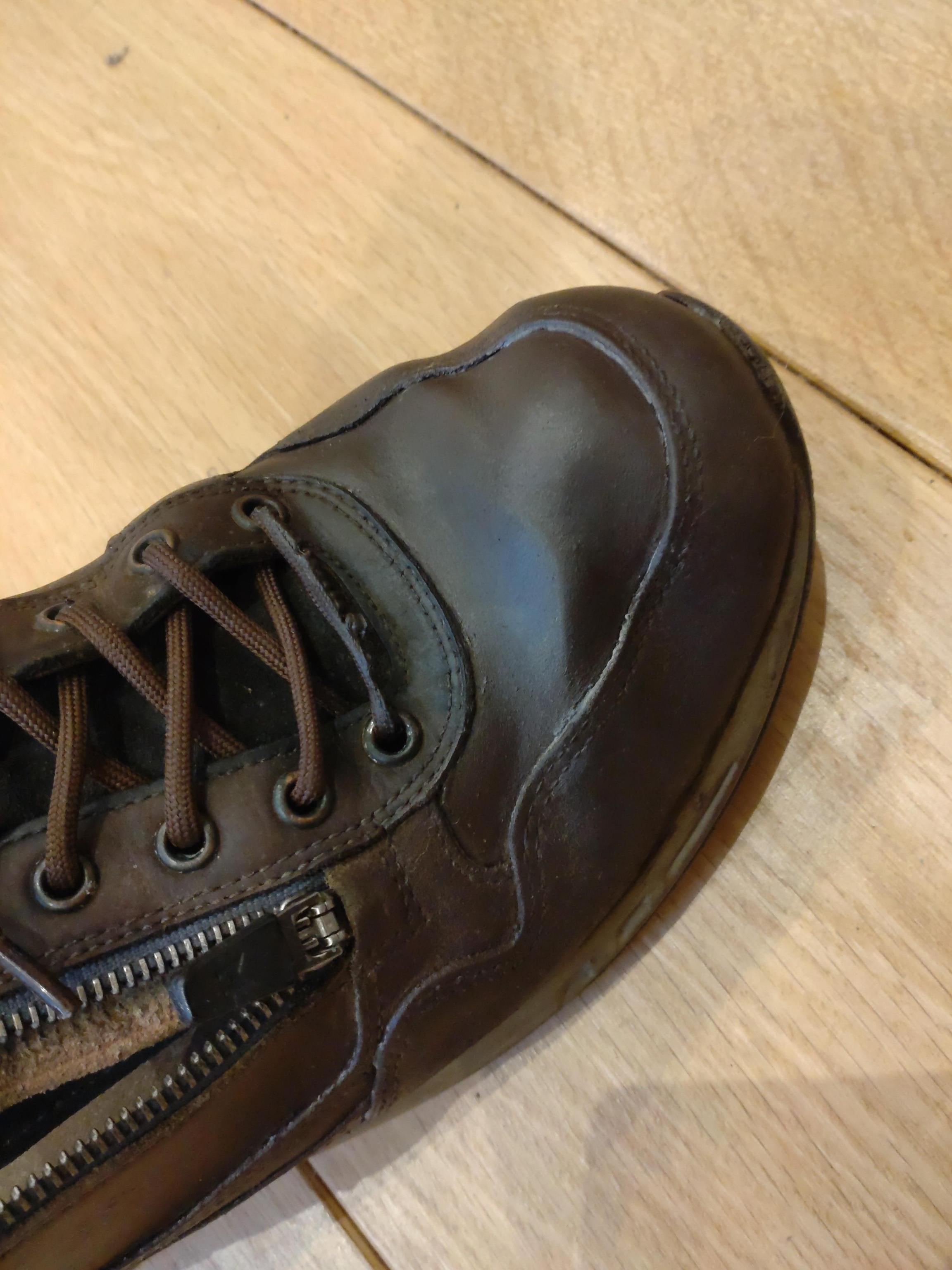
The leather repair kit came with different colors, so I used four different colors on the shoe (as I remembered the original shoe came with different colors there too).
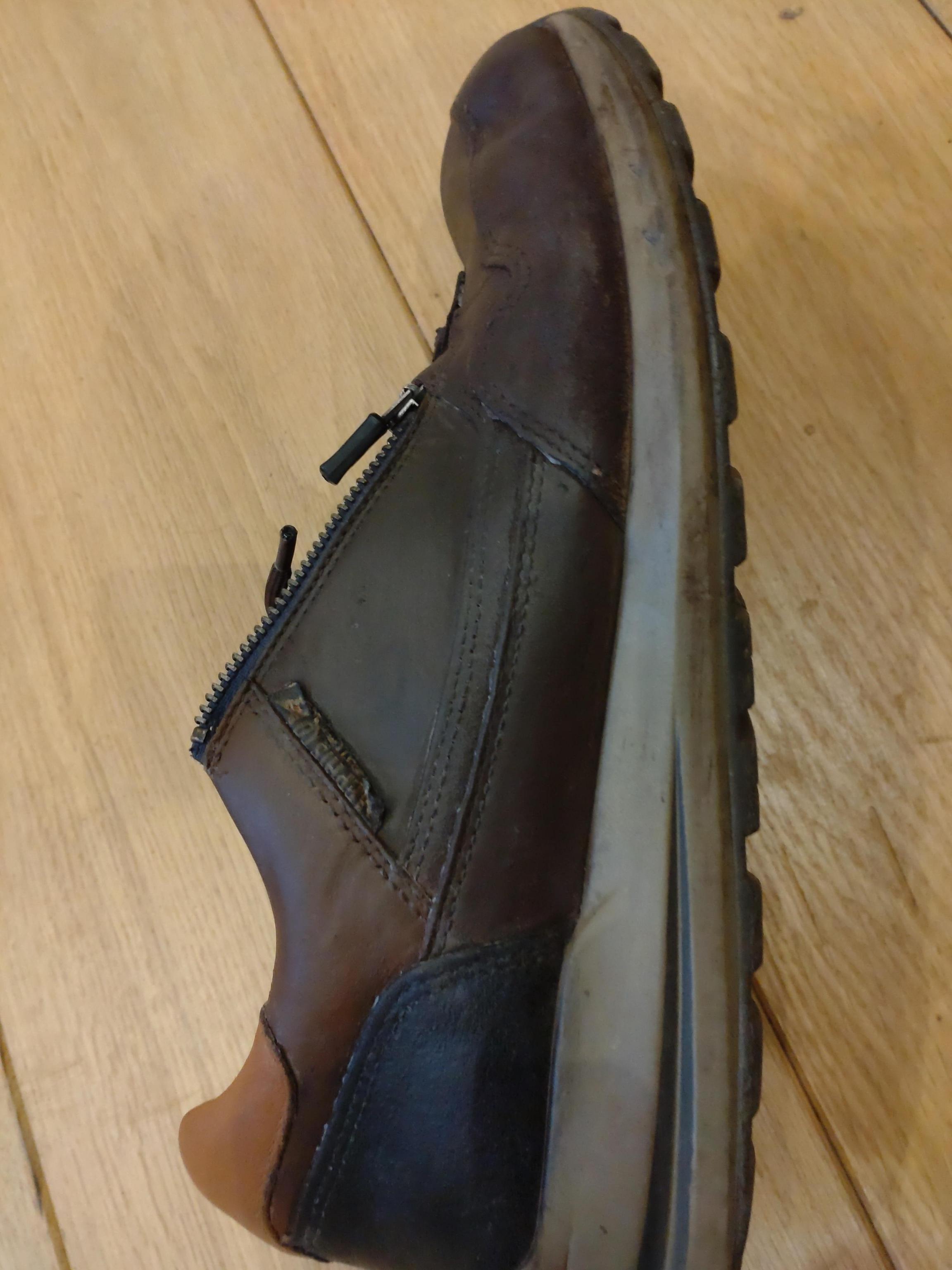
To apply the leather repair paint is about the same as applying shoe polish. It just stays on permanently. Afterwards beeswax. And you’re done.
ps. I wouldn’t try the heat gun trick on shoes of which you are not sure that all of its areas are real leather. Look at my laces: it melts stuff. Heat tends to do that. Ehm, it’s probably a good idea to remove the laces too.
ps. I recommend to tryout on old shoes first.
Allez, ik heb me weer eens druk gemaakt. Deze keer is mijn burgemeester Gwendolyn Rutten mijn slachtoffer:
Dag mevrouw Rutten,
Als iemand uit Rillaar hebben we elkaar al eens gesproken in Het Gemeentehuis. Dat ging geloof ik toen over de opvang die Scherpenheuvel al heel vroeg organiseerde voor Oekraïense vluchtelingen.
We zijn weer een jaartje verder en ik vraag me als zelfstandige (en liberaal) af wat uw partij toch aan het doen is? De partij blijkt vooral met zichzelf en dus niet met ons bezig te zijn. Dat is eigenlijk ook al jaren zo.
Wij zelfstandigen begrijpen best wel dat een partij soms eens nood heeft aan bezinning. Maar nu is het erover. Los erover.
De OpenVLD is nu bijna communistisch met zichzelf bezig. Ze vindt eigenlijk ook dat wij zelfstandige vlamingen dat ook maar moeten begrijpen ook. Dat een partij voor zelfstandigen zich voor jaren aan een stuk uitsluitend moet bezighouden met zichzelf in plaats van met de mensen waarvan de partij hoopt dat ze hun stem zullen uitbrengen voor die partij.
Maar eigenlijk is dat niet zo. Eigenlijk is het een redelijk zielige vertoning aan het worden.
Er ligt toch veel werk voor een liberale partij op de plank? Misschien ben ik te dom of zo hiervoor? Maar stond dit niet vandaag in De Tijd? “Faillissementen breken alle records in Vlaanderen“. Ah nee, sorry. Dat was gisteren. Dus misschien daarom dat OpenVLD vandaag toch maar beter bezig is met zichzelf? Dat zal vast wel belangrijker zijn! Misschien moet ik ook niet zo speciaal willen zijn en niet De Tijd lezen maar wel X of Twitter?
Zou het niet beter zijn dat U de OpenVLD achterwegen laat en gewoon zelfstandig gaat of dat U een nieuwe partij opricht?
Want dit kan echt niet langer zo.
Waar moeten wij zelfstandige liberalen nog op stemmen? Toch niet op de zielige OpenVLD? Wij gaan toch niet op een bende ruziemakers stemmen?
Ik verwacht ook veel meer van U als burgemeester dan een hoopje geruzie zoals wat we live meemaken in de Vlaamse media over uw partij. Ik verwacht bijvoorbeeld dat U als liberale burgemeester ervoor zorgt dat onze Aarschotse zelfstandigen zoals onze Horeca door deze crisisperiode kunnen geraken. Ik weet nog goed dat ik de eigenaares van De Kiezel heb zien huilen tijdens COVID19 omdat ze haar werknemers niet in dienst kon houden. Het lijkt nu terug beter te gaan. Zorgt U voor hun continuïteit in onze gemeente?
Dat is namelijk waarom ik op U stemde. Zodat wanneer ik terugkom van mijn klant, ik (soms ook met mijn klant) eens goed bij hen kan gaan eten.
Met vriendelijke groeten,
Philip Van Hoof
Zaakvoerder Codeminded BV.
Verstandige mens waar ik toen ik jong was naar opkeek bevestigt wat ik al langer denk: Woke is een gevaarlijke cult. En hoewel ik Jordan Peterson’s uitleg op veel vlakken waardeer, zoals dat ik zijn speeches later zal kunnen gebruiken om mijn eigen kleine uit te leggen dat hij zijn kamer moet opruimen, ben ik het met Dawkins ook eens dat we woke niet moeten inruilen met de kerk om er van af te geraken. Misschien moeten we in plaats daarvan onze eigen propagandamachine maar eens wat intomen en de Westerse media duidelijk maken zich niet altijd zo extreem met iedere belachelijke hype mee te laten slepen.
Vandaag had ik een gesprek met een 23 jarige.
Het heeft zowel mijn ogen geopend als dat het ze sloot. Deze dame beweerde endometriose te hebben.
Haar hele lichaam had daar last van. En de wereld moet zich daar maar eens mee bezig houden ook. Vond ze.
Het viel me op dat zij het commerciële heel erg belangrijk vond. Blijkbaar zijn er in de V.S. en in de U.K. specialisten bereid om voor veel geld haar baarmoeder te verwijderen.
En omdat dat vele geld daar is, daarom, is het zo, dat, alles, wat die zeggen, de waarheid is.
Aldus deze 23 jarige.
Zij wilde in geen geval kinderen. Dat wist ze als 23 jarige. De symptonen van endometriose waren dusdanig ernstig dat zij als 23 jarige haar baarmoeder wilde laten verwijderen door een aantal chirurgen in de V.S. en de U.K. die daartoe bereid waren, voor veel geld, dat te doen. Dat, waar de Belgische specialisten in Leuven, niet toe bereid waren.
Het maakt blijkbaar niet meer uit waar onze Belgische specialisten van overtuigd zijn. Het extreem-kapitalisme heeft het al lang overgenomen: vrouwen die hun baarmoeder willen laten verwijderen vinden gehoor in de Angelsaksische wereld.
De vrije markt heeft beslist: baarmoeders verwijderen is een transactie zoals alle anderen.
Het kostte me veel moeite om deze jongedame terug te brengen naar de werkelijkheid: dat haar lichaam een geschenk is en dat haar gift om leven te kunnen schenken het belangrijkste is dat er maar bestaat.
Ik zag net The First Turning and the End of Woke en hoewel ik zelf iemand ben die eerst bewijzen en cijfers wil zien, erken ik dat de sociologie met moeilijkheden zit: het is niet zo gemakkelijk als bv. in de fysica om die cijfers te bekomen. Net zoals de psychologie. Ik erken dat de psychologie het niet gemakkelijk heeft.
Maar de psychologie erkent dat te weinig. Veel psychologen willen vooral middeltjes verkopen en veel geld verdienen. Dat is een aandoening (het zou goed zijn moesten psychologen Ethica van Spinoza lezen) waar de sociologie minder mee kampt. Ik neem de psychologie al maar minder serieus: zij willen geld verdienen aan de onwetendheid van de gewone mensen (dus hun patiënten – ik link niet zomaar wat). Ik maak uitzonderingen: ik denk dat Dirk De Wachter een uitstekend psycholoog / psychiater is. Dat wil niet zeggen dat (ik denk dat) andere psychologen van even goede wil zijn. Psychologie hoort over de patiënt te gaan. Niet over geld. Het zal nog lang duren eer dat terug zo is.
In tegenstelling tot de psychologie, die deze dagen ideologisch losgeslagen blijkt te zijn met bijvoorbeeld genderideologie (want er zijn middeltjes zoals hormoonbehandelingen te verkopen), lijkt mij de socioloog in ‘The First Turning and the End of Woke’ toch een betere benadering van een werkelijkheid te hebben. Ik denk dat vooral psychologen eens achter de oren mogen krabben. Want het gaat van kwaad naar erger.
Ik ben geen expert want ik nuttig mijn expertise en vooral mijn passietijd al in het vak van programmeren. Dus neem mijn mening met een vat zout.
Ik ben blij dat ik geen kind gekregen heb de afgelopen twintig jaar: wat ik heb gezien is walgelijk. De huidige generatie jong volwassenen werd en is extreem overbeschermd; ze heeft geen idee van hoe zelf te leven en ze faalt daar dan ook in.
Met de fietshelm op rijden ze de afgrond in. Ze denkt dat die fietshelm hen zal redden. Ze had beter leren leven, zodat ze de afgrond niet zou ingefiets zijn. Maar het leven was te gevaarlijk voor hun overbeschermende ouders en vooral henzelf om hen dat aan te mogen leren. Dus: helmpje op, tablet aan, een veilig spelletje spelen en zwijgen: dat is de wijze van het oppervlakkige opvoeden en het opgevoed worden geweest de afgelopen jaren.
Die opvoendende ouders en henzelf willen en wilden ook altijd maar meer regels. Meer fietshelmen. Regels voor alles. Inclusief wetten voor voornaamwoorden. Iets wat totaal absurd was nog geen tien jaar eerder. Leren leven doen ze vooral niet. Het oppervlakkige slachtoffer zijn, dat wel. Ze willen regels. Meer regels. Voor anderen. Zodat ze zelf veilig zijn. Zodat ze slachtoffer kunnen blijven. Ze zijn geen echt slachtoffer. Maar hun oppervlakkige ideologie laat hen het toe om dat toch te zijn.
We leven daardoor nu in de meest debiele vorm van samenleving denkbaar: Een kus van een voetbalcoach die blij was omwille van een overwinning, is nu volledig gecriminaliseerd. Ik heb hier geen enkel begrip voor. Ik haat het. Ik haat niet de kus. Ik haat de samenleving die dit criminaliseert. Ik hoop oprecht dat dit verdwijnt. Het spijt me voor mijn mening (het spijt me helemaal niet), maar die man deed niets verkeerd. Die was blij en die kuste daarom een speelster. Dat is alles.
De huidige generatie van jongvolwassenen die geïndoctrineerd werd om het opervlakkige slachtofferschap na te streven heeft nooit de kans gekregen om te leren leven.
Mede omwille van deze generatie heb ik gewacht met een kind te verwekken. Dit jaar is het zo ver en is mijn vriendin zwanger. Ik kon ook niet langer wachten want ik zou anders te oud worden wanneer die kleine het huis verlaat. Maar het zat echt in mijn hoofd: ik wilde geen kind omdat de samenleving volledig idioot geworden was.
Kan de huidige generatie jongvolwassenen opschuiven? Zodat mijn kind zeker niet in hun leefwereld hoeft te vertoeven.
Ikzelf groeide op in de jaren tachtig en dat was in veel opzichten een veel betere tijd. Voor zowel meisjes als voor jongens. Voor iedereen. Wat we nu meemaken is degressief. Ik ‘klaag’ vandaag wel eens tegen mijn ouders hoe gevaarlijk onze opvoeding wel niet was; maar eigenlijk ben ik ze daar dankbaar voor: ik mocht van hen leren te leven. Ik leerde te overleven. Zij waren er heus wanneer het fout ging. Maar het ging niet vaak fout. Daarom ben ik nu een bekwaam en gezond volwassen individu. Met een vinger die toch wel bleek gebroken te zijn want die duim staat nu een beetje scheef. Maarja. Dat is echt waar niet zo erg.
Ik leerde turnen (en werd daar zelfs goed in) en skateboarden (en werd daar zelfs goed in, en ik brak er mijn duim). Wij groeven ondergrondse tunnels (ja, echt) en wij maakte meerdere boomhutten. Wij gingen koeien omver werpen en toen kwam de boer met zijn traktor achter ons aan. Wij gingen letterlijk wekelijks belleke-trek doen. Op het einde van onze (bijna vaste) toer gingen wij altijd bij een rijkswachter: die kwam dan achter ons aangelopen. Den traagste werd dan gepakt en diene flik ging dan eens babbelen met de ouders om dat kind terug thuis te brengen. Wij vonden het spannend om niet den traagste te zijn. Het was vast ook een goede loopoefening voor de rijkswachter: hoeveel criminelen heeft die wel niet gepakt omdat wij hem wekelijks in vorm hielden?!
De wereld was voor ons gevaarlijk en uitdagend. Leuk. Venieuwend. Leerzaam. We vielen heel de tijd en we kropen altijd weer recht. Niet af en toe maar iedere paar dagen hadden wij wel blauwe plekken en soms een gebroken been of arm. Maar, is dat dan zo erg?
Beste huidige generatie jongvolwassenen: Maak plaats voor meer samenhorigheidsgevoel i.p.v. jullie individualisme. Maak plaats voor vrijheid en ja ook voor meer gevaar. Gevaar dat toch wel opgevangen wordt omdat alle volwassenen samen een beetje meekijken.
Laat ons doen.
Laat ons onszelf leren leven.
ps. Bij de echo zagen we in de buik van mijn vrouwke dat het kindje erg veel bewoog. De echoscopist zei zelfs dat dat haar job wat moeilijker maakt. Maar heel erg vonden we dat niet. Spontaan zei ik tegen de echoscopist en tegen mijn vrouwke: dat wordt een skateboarder.
Zolang het in mijn handen is, zal die kleine stapsgewijs blootgesteld worden aan het gevaar van de wereld. Ik zal er zijn om haar of hem te redden en helpen wanneer nodig.
The combined number of men killed or wounded reached nearly 50,000, with close to 25,000 casualties on the French side and approximately 23,000 for the Allied army.
Western estimate: 60,000+ casualties (20,000+ killed) Per Ukraine: 100,000+ killed or wounded (20,000–30,000 killed)
Het dondert ten huize de voorzitster van de lokale Chiro van België. Haar voorgangster zat in de put toen hij voor een paar Euros de zeepkisten van de organisatie verkochte aan Flurk. Flurk heeft een zaak in schroot.
Flurk heeft nu aan de huisfabrikant van de Chiro van België die zeepkisten voor tien keer meer verkocht.
Over een paar maanden is het weer internationale zeepkistenrace aan het front. Flurk is na de race van plan daar nog meer schroot op te kopen.
“Op papier is alles schroot”, reageerde Flurk aan onze redactie. “Met wa Cola kunde de roest verwijderen. Daarna bolt da trug ze!” Zei Flurk nog.
Misschien moet ik maar eens solliciteren bij De Rechtzetting? De werkelijkheid wordt steeds onnauwkeuriger.